Liposculpture and liposuction are two terms used synonymously with liposuction. Although the method does not require large cuts on the body, it is considered surgery.
The procedure leaves only small wounds on the skin, but large wounds inside. Liposuction is among the most frequently performed cosmetic surgical procedures.
You must be 18 years old to have a cosmetic operation in Denmark; see Order on cosmetic treatment. Liposuction is done privately.
What is the purpose of liposuction?
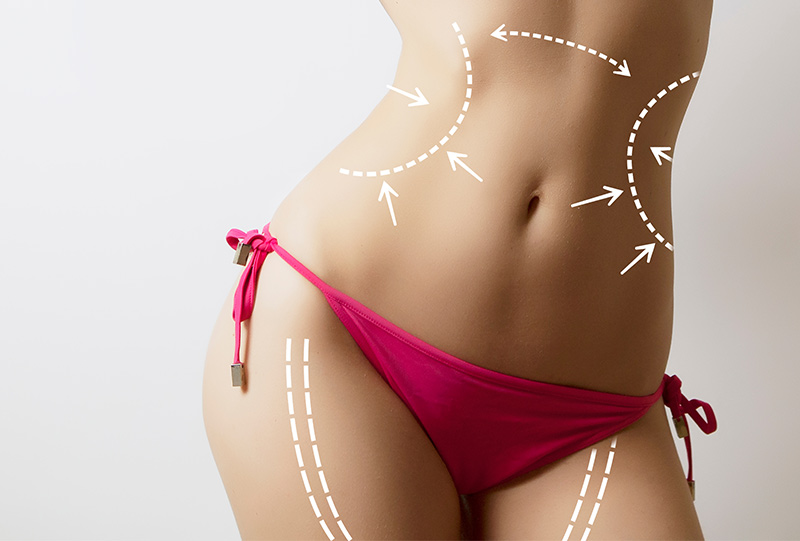
The purpose of the procedure is to remove accumulations of fat on the body, which are difficult to get away through diet and exercise. Examples of such areas of the body are the abdomen, waist, hips, upper arms, thighs and knees. Also, unwanted fat on other parts of the body can be removed by liposuction.
Watch animation about liposuction
How is the operation going?
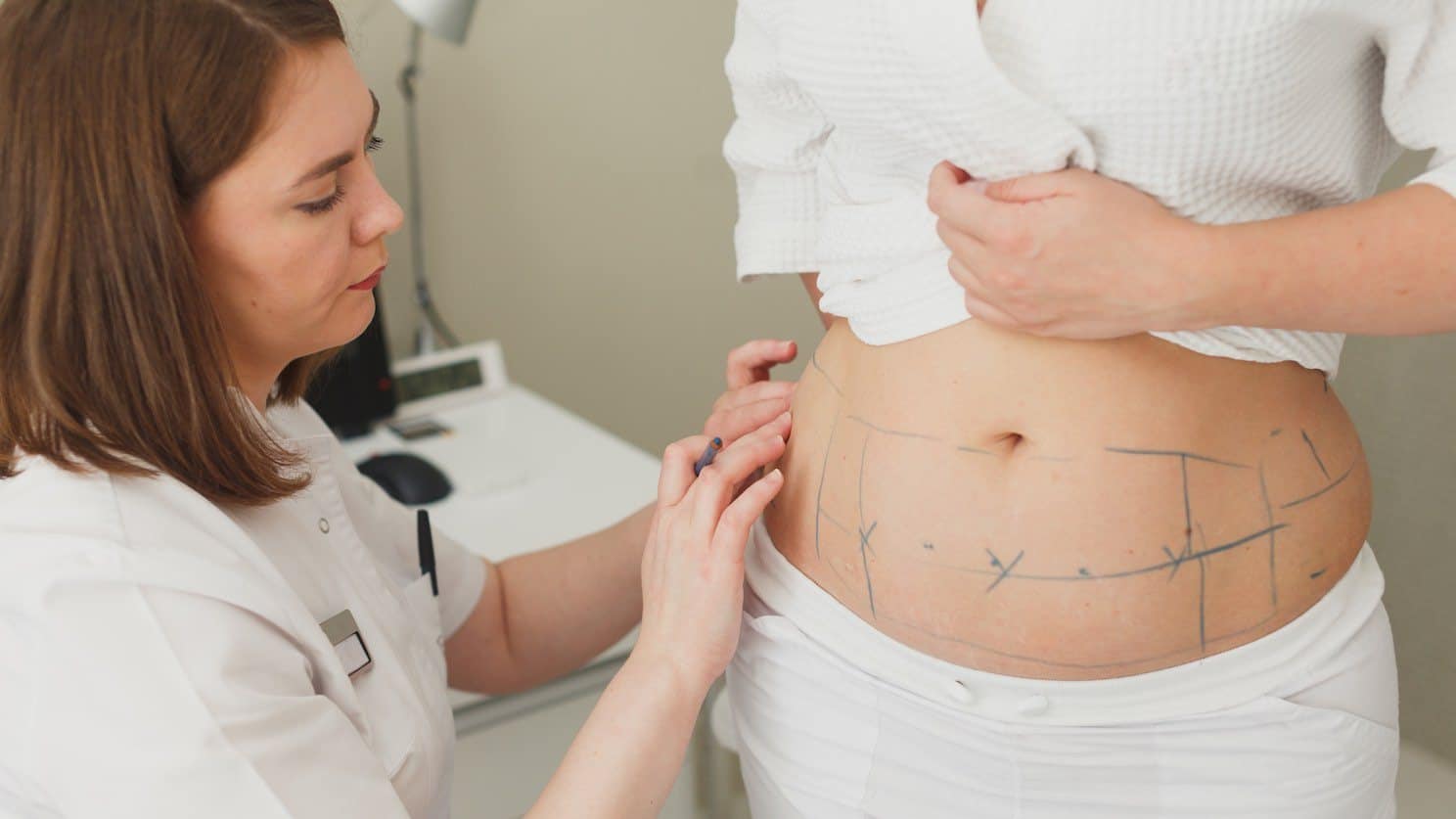
During the consultation, the plastic surgeon will decide with the patient which fat deposits can be removed. The skin’s elasticity is tested to see if there is a need to remove excess skin during or after the procedure, for example, for loose abdominal skin surgery.
Liposuction can be performed under local anesthesia or in full anesthesia. The plastic surgeon injects saline mixed with adrenaline, which is vasoconstrictor, and possibly, local anesthesia under the skin in the area that is desired to liposuction. Then the fat is sucked out through several small incisions in the skin by means of a tube connected to a suction mechanism. Suction is made from different holes in different directions to remove fat cells from multiple layers of fat in the body and to make the result of liposuction as smooth as possible.
The fat is collected together with the injected liquid in a container. When sufficient grease is sucked out, the openings are sewn again. It may be tempting to ask the plastic surgeon to suck as much fat as possible out of the subcutaneous tissue. However, if too much is sucked in, it can become very difficult to correct any unevenness later. The most important thing is not what is sucked, but what is left behind.
The duration of the procedure depends on the techniques the plastic surgeon uses and the amount of grease to be removed. It can take anywhere from one to three hours. Liposuction can be performed under local anesthesia or in full anesthesia.
Results of the procedure
After the operation, you will receive a compression bandage which you will need to apply for 2-6 weeks. This is done to avoid unevenness and loose-hanging skin. Most often the threads are removed after 7-14 days.
Keeping your weight can result in a long time. Namely, no new fat cells are formed to replace those that the plastic surgeon has removed. But it does not rule out the possibility of getting more fat on the body – the size of each remaining fat cell can continue to grow and increase.
Liposuction is not an alternative to diet and exercise. It is not a method to slim down, nor is it a treatment for orange skin. The surgical technique removes only subcutaneous fat and not fat that lies inside the muscles or inside the intestines. Therefore, liposuction only helps to a limited extent against abdominal obesity.
Side effects after liposuction
You will usually get swelling and discoloration in the time after the procedure. Pain medication can reduce the discomfort. The swelling is worst for the first 1-2 weeks, but can last for up to 8 weeks. The discolorations usually subside after a few weeks. Most are back in light work after one to two weeks.
One should avoid heavy activity such as weightlifting, running or aerobics in the first month. On the other hand, you should also not sit still all day. Walking can prevent blood clots in the legs.
It may take 1-3 months and a few times a year before you get the final result of liposuction. During this time, you can massage the treated areas to smooth out any bumps. The scars are usually small and fade by themselves over time.
Possible complications
If your skin has poor elasticity, it will hang more than usual. This excess skin can be removed by the plastic surgeon at the same time as the liposuction or later surgery.
Complications can occur in all surgeries, but rarely occur. You may be at risk of:
Read more about common complications of cosmetic surgery.
https://estheticland.com/cosmetic-surgery/liposuction-turkey/
How common is liposuction?
In the United States, liposuction is the most frequent cosmetic surgical procedure according to the American Society for Aesthetic Plastic Surgerys (ASAPS) statistics. In 2014, nearly half a million interventions were performed in the United States. Tall
 Liposuction Kinds and Risks